

Garifuna Drumming Workshop Belize
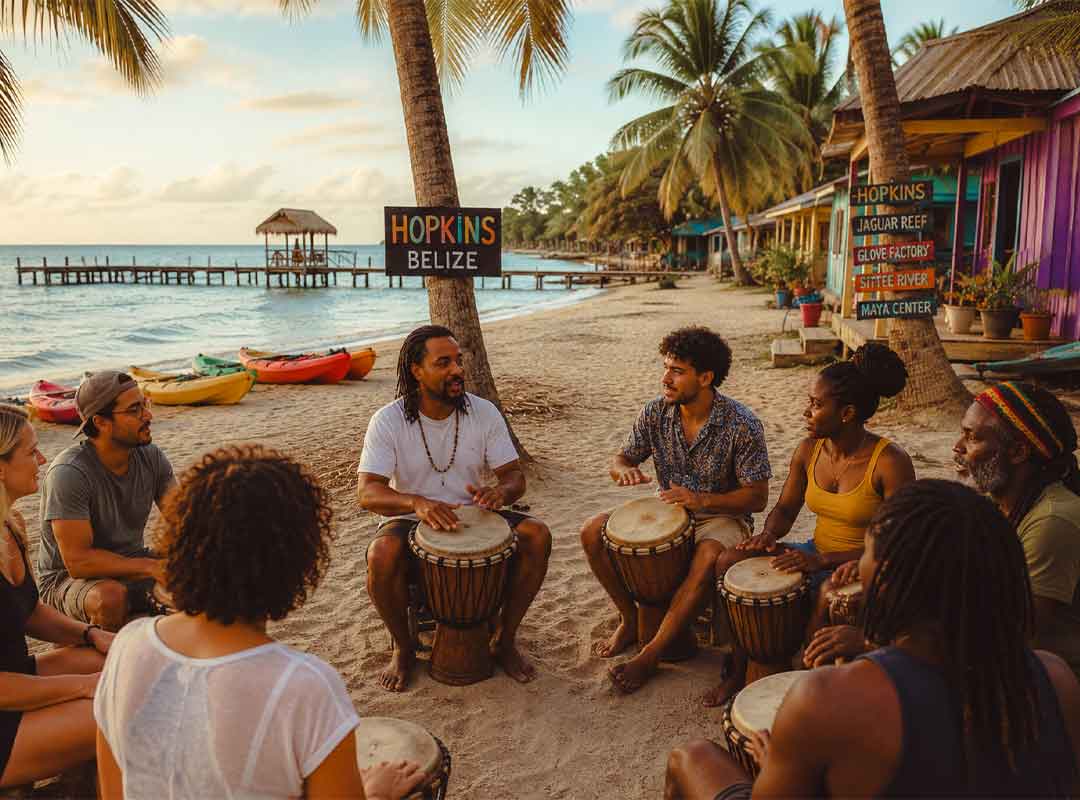
Most families arrive in Belize expecting "culture" to be a quick market stop, a photo with a carved mask, then back to the reef. But the moments kids remember are the ones where they get to do the thing: loud, sweaty, slightly chaotic, and somehow meaningful.
A Garifuna drumming workshop for families is exactly that. It's a hands-on session where you and your children learn core punta rhythms on traditional drums, pick up call-and-response cues that hold the music together, and usually get pulled into dancing, singing, and stories, sometimes even food, depending on the facilitator and the village. It's equal parts fun and education, and it lands differently because you're learning inside a living community, not watching a "cultural night" staged for a cocktail crowd.
Belize is touristy in spots, yes, but not in that sealed-off resort way. If you aim your trip just a little off the main routes, you still hit places where local life isn't performing for you. That's why a drumming workshop works so well here. It doesn't feel like a gimmick. It feels like you arrived somewhere real.
What Happens in a Family Session?
Welcome and Context
Most sessions start the same way: greetings, names, a bit of laughter at who looks nervous. Then the facilitator frames what you're about to touch, not a "history class" exactly, but a genuine introduction: who we are, why the drumbeat matters, why punta is more than the catchy rhythm you heard at a beach bar.
You'll hear about the Garifuna people as a Caribbean and Central American story, St. Vincent in the background, forced displacement, settlement, survival, and how music became a kind of portable home. If you're lucky, the teacher will mention Garifuna Settlement Day and what celebrations look like when they're for community first, visitors second. You're not being guilt-tripped. You're being oriented.
For a clean starting point before you go, the Belize Tourism Board's page on the Warasa Garifuna Drum School lays out the usual mix of drumming, dancing, and cooking lessons.
Hands-On Rhythm Practice
Then the hands get busy. Primero and Segunda drums appear, and you feel the difference fast. The bass sits in your chest. The higher voice cuts through, sharp and talkative. Some workshops add maracas and a small-drum circle feel, but it stays rooted in traditional Garifuna drumming rather than becoming a generic wellness session.
You'll normally be guided through three practical steps:
- How to sit and hold the drum so your wrists don't hate you the next day.
- Where the main beats live in Punta, so you stop chasing the rhythm like it's a runaway chicken.
- How to listen for cues, because ensemble timing is the secret sauce.
The teaching style matters. The best facilitators correct without shaming, especially with kids. That patience shows up in traveler feedback too, including multi-generational reviews of the family drumming lesson in Punta Gorda, where even the "rhythm-challenged" end up smiling.
Dance, Song, and Food Options
A pure drumming class can run 60 to 90 minutes and still feel full. But many facilitators layer in dance because punta isn't meant to sit still. Kids usually click with the footwork faster than adults do, humbling but good for the soul.
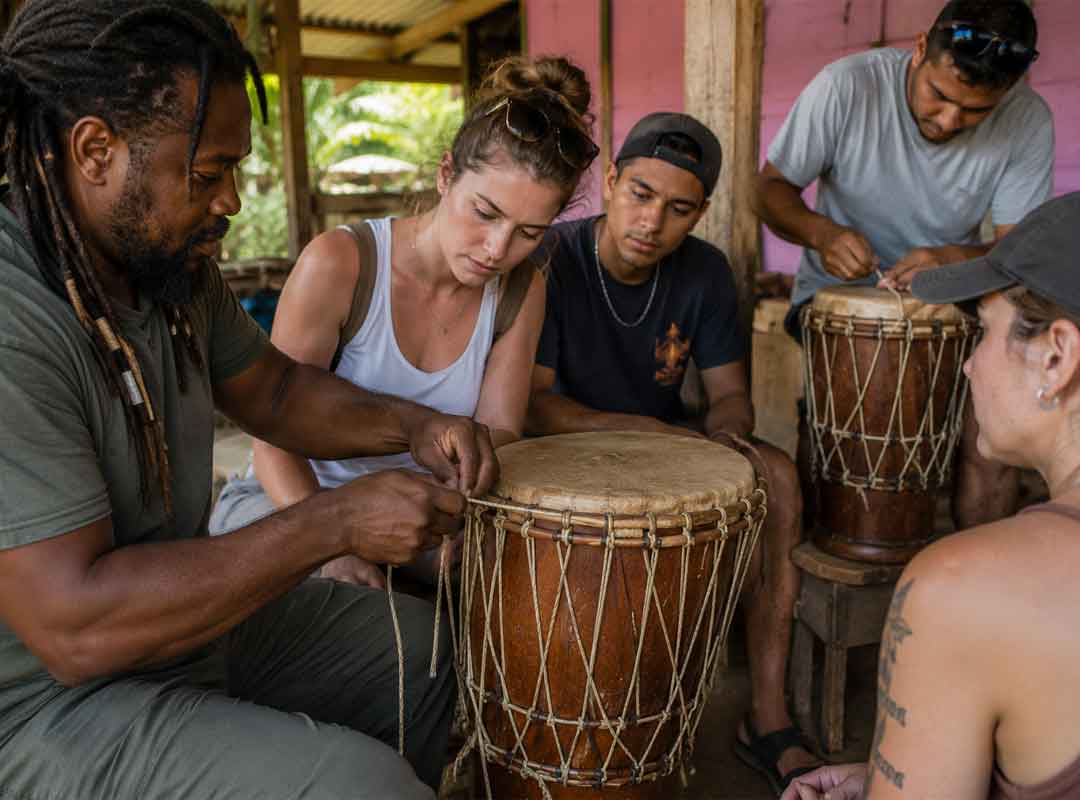
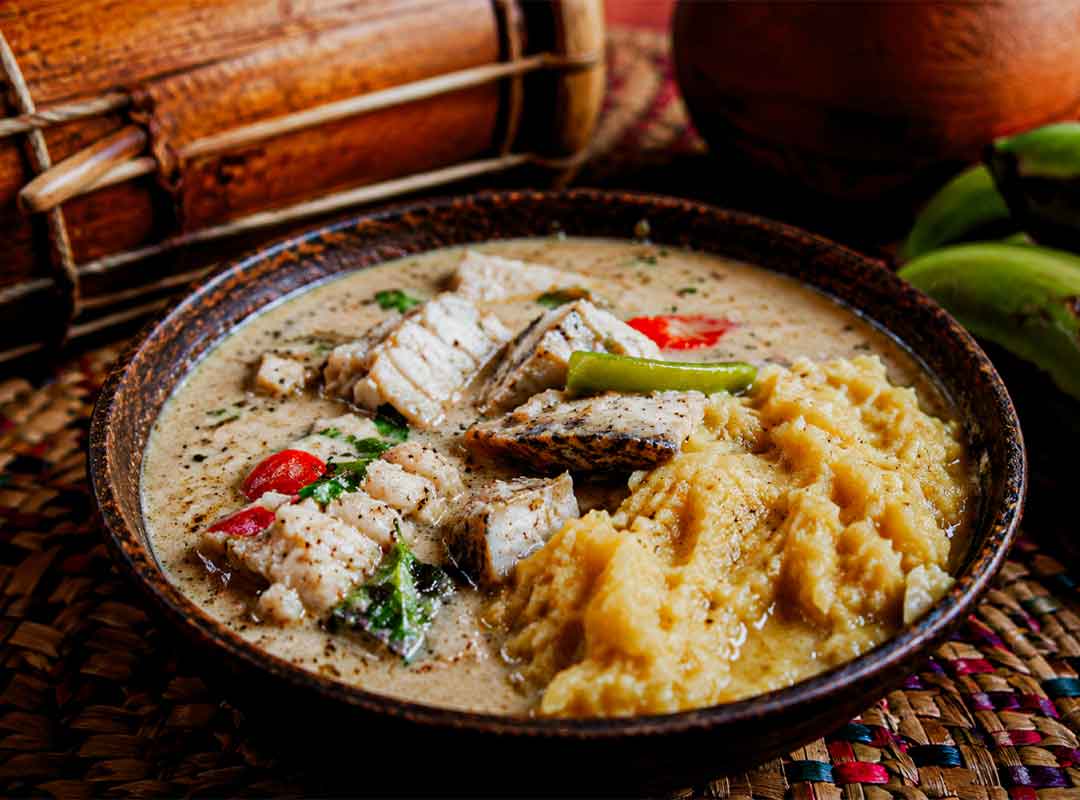
Some sessions add singing, short Garifuna phrases, and a bit of storytelling. Others go bigger: drum making, then drumming, then dancing, then dinner. If hudut lands on the table, a rich coconut fish stew with mashed plantain, you're in for the kind of meal that earns that satisfied quiet after a day that used your whole body.
Hopkins has excellent eco-cultural options too, like hands-on workshops at the Palmento Grove cultural center, where heritage sits front and center, not hidden behind a souvenir counter.
What Will Kids and Adults Learn?
Basic Punta Patterns
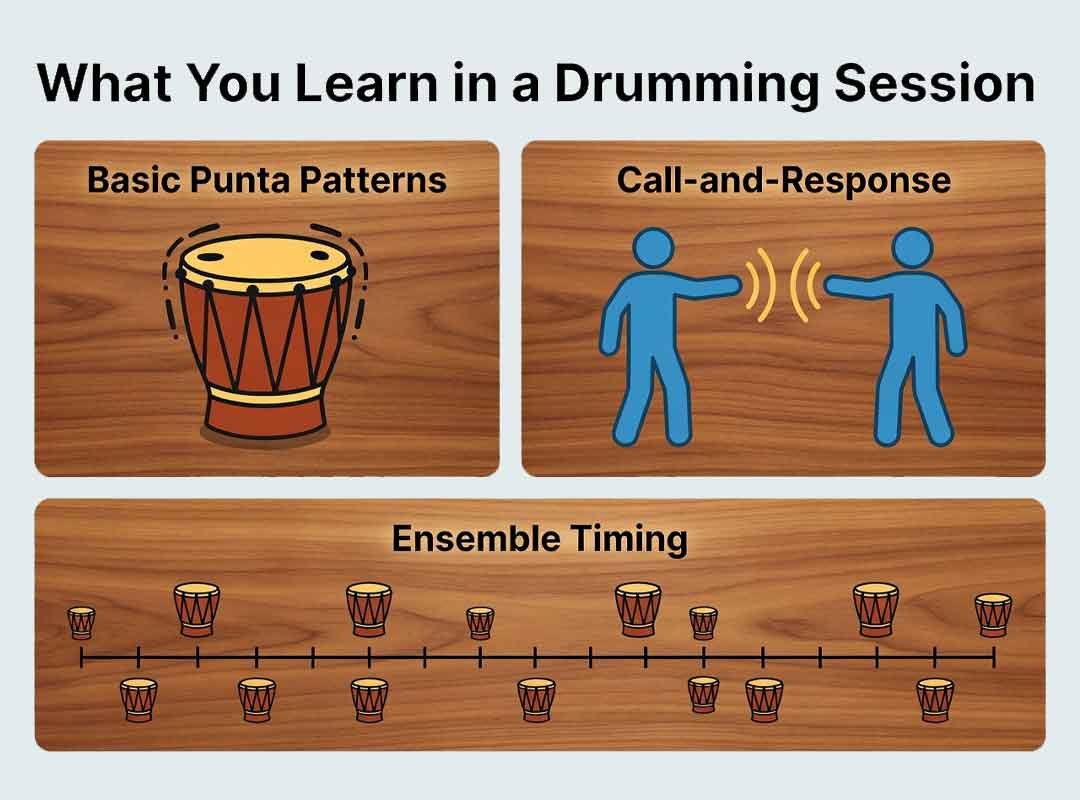
Kids learn punta by feeling it. Adults try to count. Both approaches work, eventually. Punta patterns start with a simple base, then add the subtle accents that make it sound like actual Garifuna music rather than random tapping.
You'll also learn how the Segunda holds a repeating foundation while the Primero plays phrases over top, almost like a conversation. That's why a single tradition can feel so alive: it's structured, but it breathes.
Call-and-Response Cues
Call-and-response is where families lock in together. Someone leads, someone answers. You learn to watch shoulders, hands, eyebrows, whatever the leader uses to signal the change. It's also where shy kids tend to pop out of their shells, because they have permission to respond as part of a group.
A good facilitator explains that this isn't just "music technique", it's community logic. The same logic shows up in parades, festivals, and the way folks organize celebrations without needing a stage manager.
Simple Ensemble Timing
Ensemble timing is the part that people underestimate. You can hit the drum hard all you want and still sound messy if you rush. Most workshops teach you to sit inside the beat, listen across the circle, and keep your own lane. By the end, beginners usually manage a short group piece that actually sounds like something. Not perfect. Real. Enough to make you want to keep going on the ride back to your lodge.
Choose the Right Place in Belize
Punta Gorda and Toledo
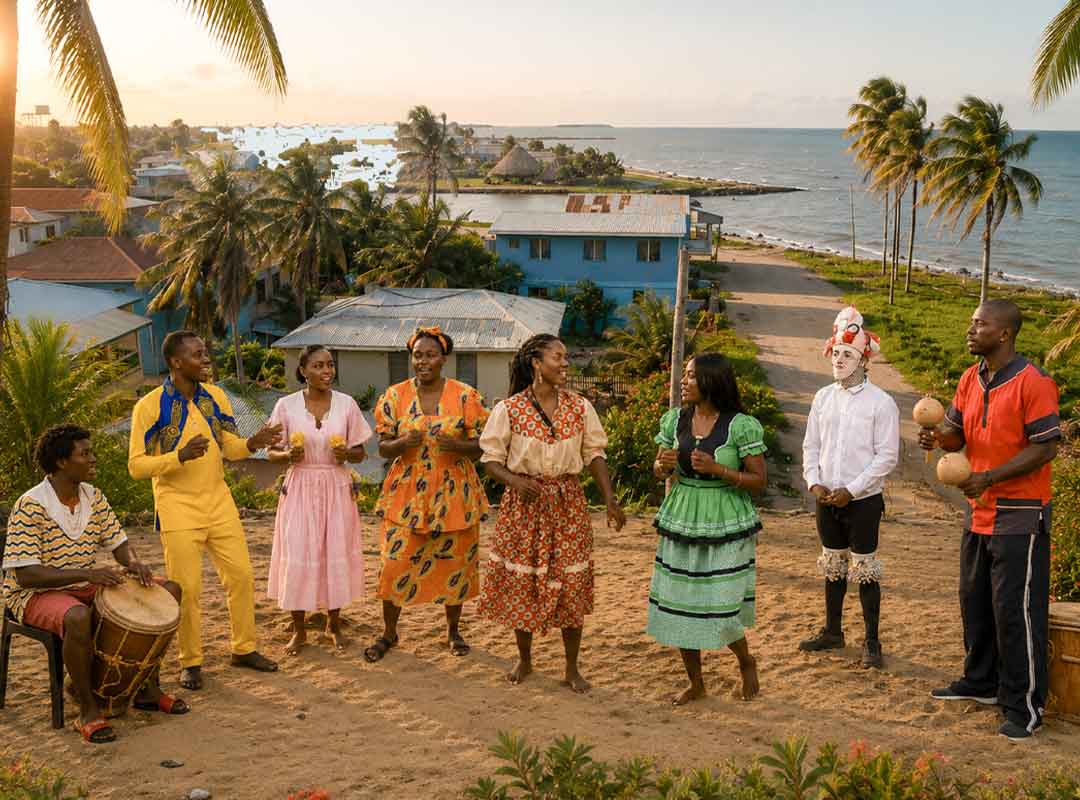
Punta Gorda, down in Toledo, has a reputation for feeling grounded, not glossy. It's a strong choice for families who want authentic Garifuna drumming tied to community life, not a one-off tour. Warasa Drum School is the most talked-about provider, and you can browse their details before you arrive.
Toledo pairs well with nature-forward travel: cacao farms, river days, village meals. Easy to build a trip that doesn't feel rushed.
Hopkins and Stann Creek
Hopkins is the "easy yes" for many families: accessible and walkable, with the option to stack your drumming session with beach time, kayaking, and village dinners. The Lebeha Drumming Center has been part of Hopkins' music scene since the early 2000s and remains a trusted choice.
Placencia, Belize City, and the Cayes
Placencia and the cayes work if your family is reef-first and culture-second, but still wants one genuine experience to balance the trip. San Pedro sometimes offers shorter "sunset dinner"- style sessions, 90 minutes over the water, that fit neatly into a beach-heavy itinerary.
Belize City is usually a pass for families unless you have a specific reason to be there.
| Location | Best for | Typical vibe | Good add-ons |
|---|---|---|---|
| Punta Gorda, Toledo | Deep community feel, slower tempo | Less polished, more local | Cacao, village meals, forest day trips |
| Hopkins, Stann Creek | Convenience plus strong Garifuna culture | Beach village, friendly, musical | Kayaking, easy day tours, relaxed nights |
| Placencia / Cayes | Tight schedules, reef-first families | More tourist flow | Snorkeling, island days, dinner events |
Plan the Session Details
Length and Scheduling
Most family sessions run 60 to 120 minutes. Full-day versions can stretch to 4–6 hours if drum making and a meal are included. Scheduling is usually flexible, but don't treat it like last-minute filler. Good facilitators balance their own community responsibilities; they aren't waiting around like hotel staff.
Ages and Attention Span
For little ones, ages 5 and up, is where it starts to click; they can follow cues and respect the instrument. Teenagers can go deeper, especially if the facilitator teaches variations beyond the base beat. Under 5? Some families still bring them, but expect more "watch and wiggle" than "play and learn."
Group Size and Language
Small groups feel best, 4 to 12 people, so everyone gets attention, and you can actually hear the teacher. Some schools handle 20 to 25 when it's multi-generational, but the session needs a stronger structure. Language-wise, English is usually fine, with bits of Garifuna sprinkled in. That's part of the gift: you're not expected to become fluent, just respectful and curious.
| Detail | Typical range | What it means for families |
|---|---|---|
| Session length | 60 to 120 minutes | Easier for kids, still satisfying |
| Group size | 4 to 12 (sometimes up to 25) | Smaller means more hands-on help |
| Age fit | 5+ ideal | Under 5 is mostly observing |
| Add-ons | Dance, singing, dinner, drum making | Choose based on your kids' stamina |
Budget, Booking, and What to Bring
Typical Price Ranges
Prices vary. A simple class might run BZ$60 to BZ$120 per person; a private session can be priced differently depending on group size and transport. Full-day experiences with drum-making and a meal can cost more, but you're paying for depth and quality.
For medium- to high-end travelers who value a tailored experience, Authentic Travel Belize operates private, guided tours that can include a Garifuna drumming workshop as part of a custom family itinerary. You get a dedicated guide, flexible timing, and the kind of attention that makes a cultural experience feel seamless rather than logistical.
Clothing and Essentials
- Light clothes you don't mind getting dusty.
- Water — especially for kids who forget they're thirsty.
- A small towel or bandana for hands and forehead.
- Cash in Belize dollars for tips, crafts, or food add-ons.
Follow Cultural Respect and Etiquette
Ask Before Filming
People love a quick reel, I get it. Still, ask before you film, especially kids and elders, and especially if the session touches on spiritual meaning. These workshops feel authentic precisely because they aren't built around your camera.
Treat Drums Properly
Don't step over drums. Don't toss them around. Don't let kids treat them like furniture. The drum is both an instrument and a cultural object, with rules governing its handling. Facilitators teach that gently, and as a parent, you'll want to back them up.
Support Local Craft Fairly
If drum-making is offered, you're stepping into a craft and labor, not a cheap souvenir corner. Pay fair. Ask who made what. Buy fewer and better, and don't haggle like it's sport.
FAQ
Can beginners still sound good by the end?
Yes — in the way that matters. You're not leaving as a reincarnated master drummer. You're leaving with a shared rhythm your family built together, plus enough technique to understand what you're hearing when punta shows up at a real celebration.
How does this support Garifuna heritage?
When you pay a real community facilitator, you're backing skill transmission, instrument knowledge, and the time it takes to teach youth. Heritage doesn't preserve itself on good vibes alone; it takes money, organization, and repetition. Programs like the Battle of the Drums cultural initiative center on language preservation, drumming, and community camps as living pillars.
What safety notes matter for young children?
Sound level is the big one. Drums are loud up close. Bring child-sized ear protection if your kid is sensitive to noise. Watch hydration and sun exposure. Also, plan transport like an adult, night driving in unfamiliar areas, especially in heavy rain, isn't the time to be adventurous.
How do you pick a reputable facilitator?
Look for community roots, not marketing polish. Ask who teaches, how long they've been practicing, whether they work with local youth, and whether the session includes context, not just performance.
Conclusion
If your family wants a Belize experience that sticks, book the workshop. Put it on your calendar early, not as a leftover slot between snorkel trips. Let your kids find a rhythm that comes from the land, history, and community, not from a playlist.
You'll leave with sore hands, a brighter sense of place, and a kind of shared gift that's hard to buy anywhere else. And quietly, without making a big speech about it, you'll have supported a living tradition that still deserves to be loud.